
Pitching a podcast feels intimidating, and most advice makes it worse by piling on wording tips: lead with this, phrase that, open with a hook. Our own pitch data says that is backwards. The email is the easy part. What actually decides whether you get booked is who you are and which shows you pitch.
Here is the simple version of how to pitch a podcast, why the wording matters less than you think, and the four steps that actually move your booking rate.
How do you pitch a podcast?
To pitch a podcast, build a clear profile of who you are and the angle you bring, find shows that genuinely fit your topic and take guests, then send the host a short, specific email: why you fit their show, what you would talk about, and an easy way to say yes or no. Follow up once or twice. The targeting and the profile matter more than the wording.
That is the whole thing. The rest of this guide is why each step works and how to do it well.
Does the pitch wording actually matter?
Less than you have been told. In our data, the number one reason pitches get declined is wrong fit, not weak writing. More than a third of declines come down to the show simply not being a match. You cannot phrase your way onto the wrong podcast.
The corollary surprises people: well-matched pitches written with AI book at higher rates than carefully hand-written pitches sent to the wrong shows. Template-based pitches book around 3.9%, versus 1.7% for fully manual ones, and on the highest-fit shows AI-assisted pitches book at about 5.2%. The lesson is not "AI is magic." It is that relevance beats wordsmithing. Using AI to write a sharp pitch to a show you actually fit is fine; blasting hundreds of irrelevant shows, by hand or by AI, is what fails. (More on that: why mass pitching is broken.)
So stop agonizing over the copy. Spend that energy on the two things that move the needle: your profile and your targeting.
Step 1: Build a profile worth booking
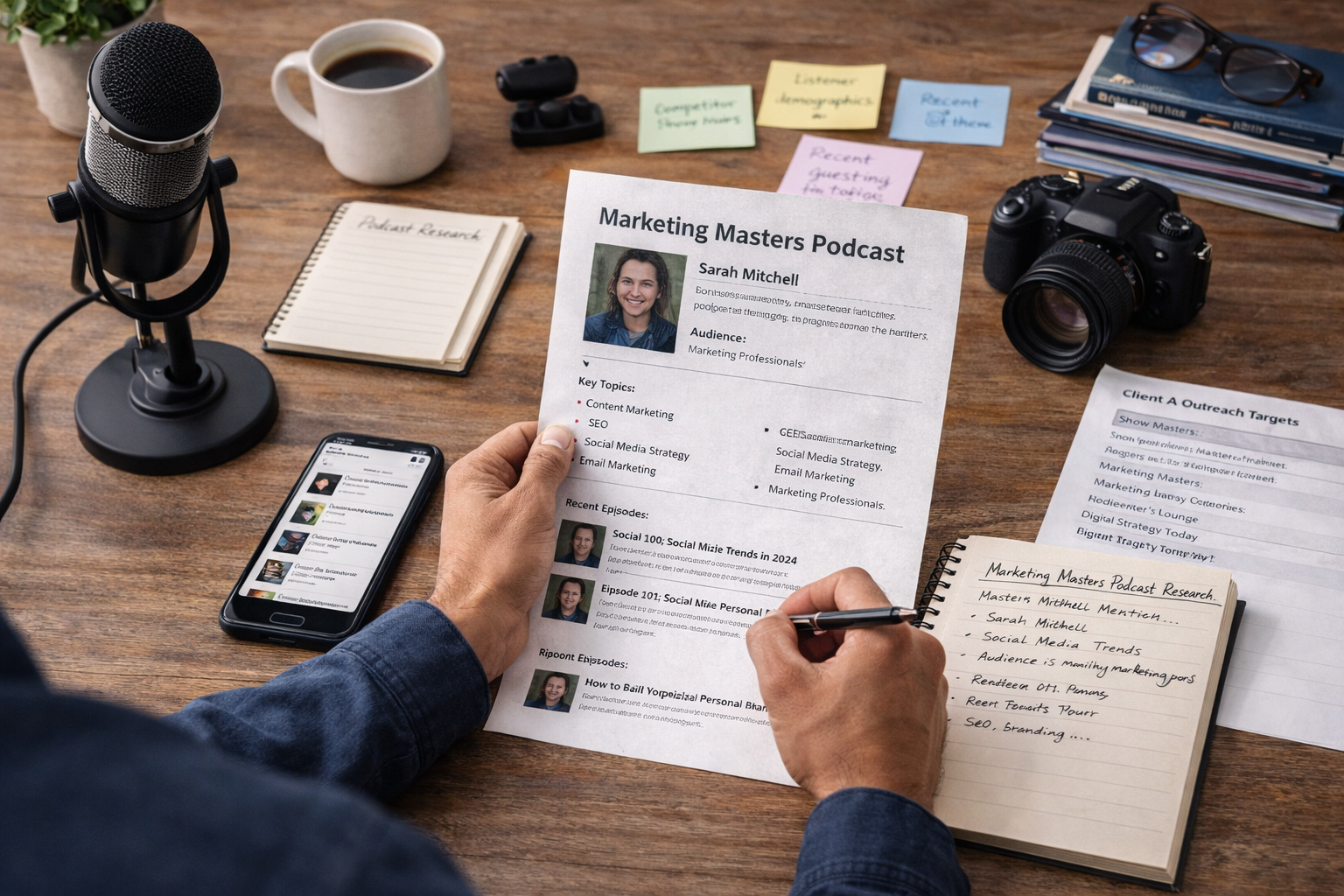
Before you write a single pitch, get clear on the one or two topics you can speak on with real authority and the specific angle a host's audience would care about. A tight, credible profile is what lets a host say yes quickly, and it is the raw material every good pitch (and every good AI-drafted pitch) is built from.
Write down: the topics you own, one or two pieces of proof that you are worth listening to, and the angle that makes you interesting rather than generic. A vague generalist is a hard sell. A clear expert on a specific topic is an easy yes. Best of all, this profile is reusable: you build it once and every pitch draws from it.
Step 2: Target the right shows
Pitch shows that genuinely fit your topic, take guests, are still active, and have a reachable host. Fit is the single biggest predictor of a yes, so this step does more for your booking rate than any wording trick. Search by a specific niche, not a broad category: aim for the shows whose audience maps tightly to your expertise.
This is where most guest strategy is won or lost. For the full method of building a fit-first list, see how to find podcasts to be a guest on, and before you pitch, do a quick check of how to research a podcast before pitching.
Step 3: Write a simple pitch (AI is fine)
A good podcast pitch is short and specific. It needs five things:
- A subject line that signals fit, not flattery
- One line on why you fit their show specifically
- One or two concrete topics or angles you would cover
- A little proof you make a good guest (a result, a credential, a past appearance)
- An easy way to say yes or no
Keep it under about 150 words. That is it. AI can draft this well when you feed it the show's details and your profile, which is exactly why a strong profile and good targeting make the writing trivial. Just review every word before it sends; your name is on the email. For real examples to model, see podcast pitch templates that get bookings, and for the host's side, what podcast hosts actually want in a pitch.
Step 4: Follow up
In Podseeker’s timing sample of 145 booked pitches, the median time from the initial pitch to an evidenced booking confirmation was 3.7 days. The 75th percentile was 14.9 days, the 90th was 56.6 days, and the 95th was 71.9 days. Many observed bookings arrived quickly, while some developed over several weeks.
The sample covers pitches sent March 11–July 13, 2026, from active organizations after trial, with outcomes observed September 11. Internal organizations, automated users, and void pitches were excluded. All 145 booked pitches had usable timing. Dates reflect the earliest evidenced acceptance, or a later confirmation when the original exchange is unavailable; they are not episode publication dates. These figures describe observed bookings, not the chance that an unanswered pitch will convert. See the booking benchmark methodology.
Review replies before following up, respect declines, and use a relevant reason to reconnect. See our podcast pitch follow-up guide.
How to pitch a podcast: FAQ
How do you pitch yourself as a podcast guest?
Define the topics you can speak on with authority, find shows that fit and take guests, and send the host a short email: why you fit their show, one or two topics you would cover, brief proof, and an easy yes. Then follow up.
How long should a podcast pitch be?
Short. Aim for under 150 words. Hosts skim, so a tight, specific pitch beats a long one almost every time.
Is it OK to use AI or templates to pitch podcasts?
Yes, as long as you target well. Template and AI-assisted pitches book at higher rates than manual ones when they go to well-fit shows. The problem is never AI; it is sending irrelevant pitches at scale.
What should a podcast pitch include?
A subject line that signals fit, one line on why you fit the show, one or two concrete topics, a little proof you are a good guest, and an easy way to decline.
How many podcasts should you pitch?
Enough, consistently. A well-targeted reply rate is roughly one in eight, and about 3% of pitches book, so a sharp list sent steadily beats one big blast.
The bottom line
Pitching a podcast is simpler than the advice makes it sound. Build a profile worth booking, target shows that actually fit, send a short specific pitch (AI is fine), and follow up. Get those right and the exact wording barely matters.
Try Podseeker free to find guest-ready podcasts that fit your topic, then pitch the hosts directly.



Try us risk free with a FREE 3 days trial.